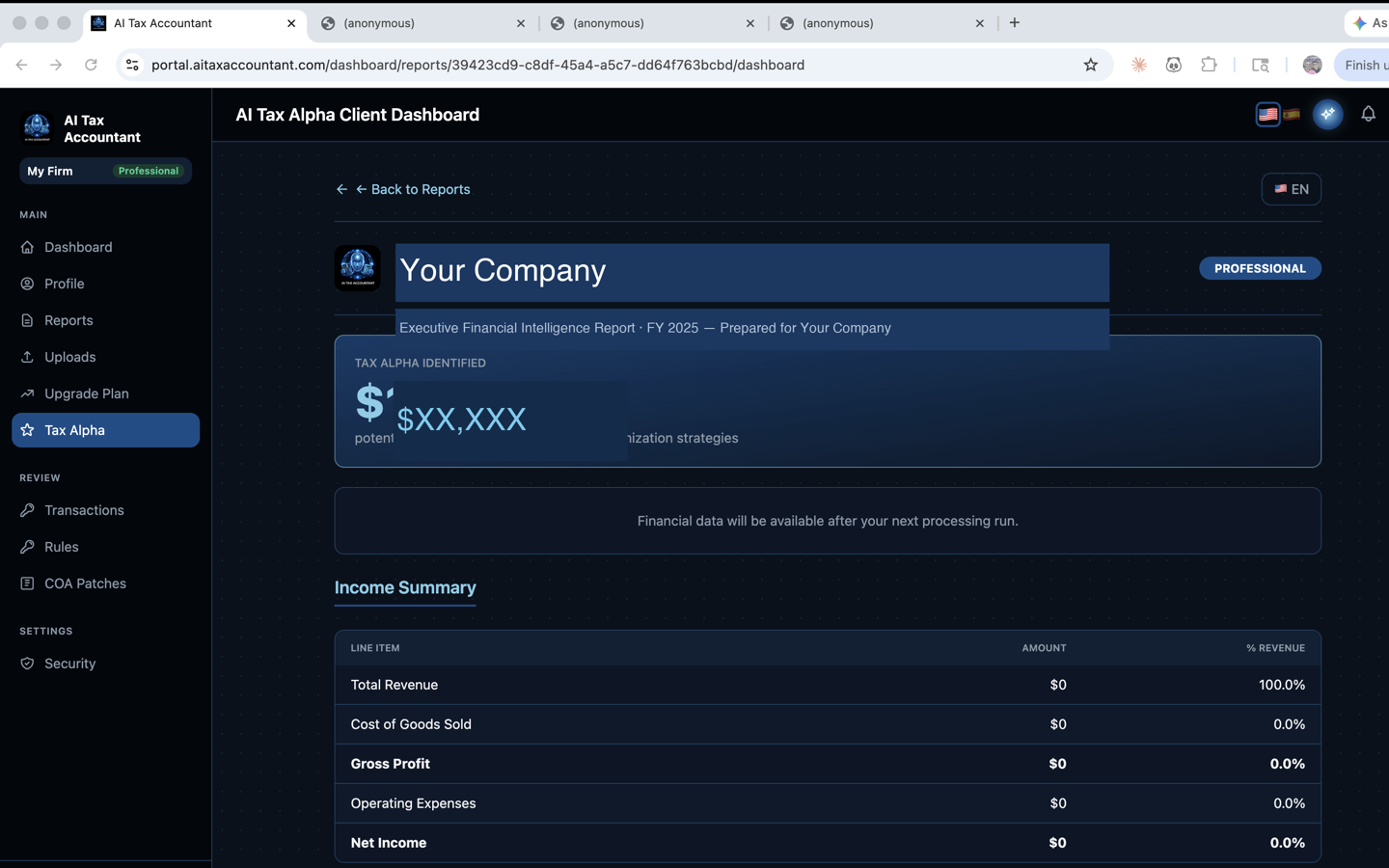
"Tax Alpha" is the term we use for the gap between what a business is paying in taxes today and what it could be paying with a more thorough planning posture. It borrows the word "alpha" from investing — the excess return above a benchmark — and applies it to the tax code: dollars left on the table relative to what the law allows.
How Tax Alpha is calculated
Our AI reads every transaction in your uploaded statements, classifies it against the GAAP chart of accounts, and then runs it against a library of planning strategies tied to specific Internal Revenue Code (IRC) sections. Each strategy that has a plausible match given your data shows an estimated savings range, the relevant IRC citation, and a plain-English explanation in the Tax Alpha Opportunities section.
What "missed deductions" actually means
Throughout the report, language like "potentially missed deduction" or "may qualify" is deliberate. Our system identifies patterns in your data that are consistent with deductible activity under specific code sections — for example, a home-based business pattern that may align with the §280A Augusta Rule, or vehicle expenses that may benefit from §179 treatment. We are not asserting that you should claim these. We are flagging that the conditions look present and a human professional should evaluate them.
How to use the findings
- Treat each strategy as a question, not an answer.
- Bring the relevant IRC citation to your tax professional — it tells them exactly where in the code to look.
- The estimated savings range is bracketed because actual savings depend on your full tax picture, not just the data we have.
- Strategies in the Compliance Items section have no dollar value attached — they're recordkeeping or filing tasks needed to keep an existing strategy valid.
AI Tax Accountant identifies potential deductions to discuss with your tax professional. It does not give specific tax advice or determine what you may legally claim. Always consult a CPA before implementing any strategy.